
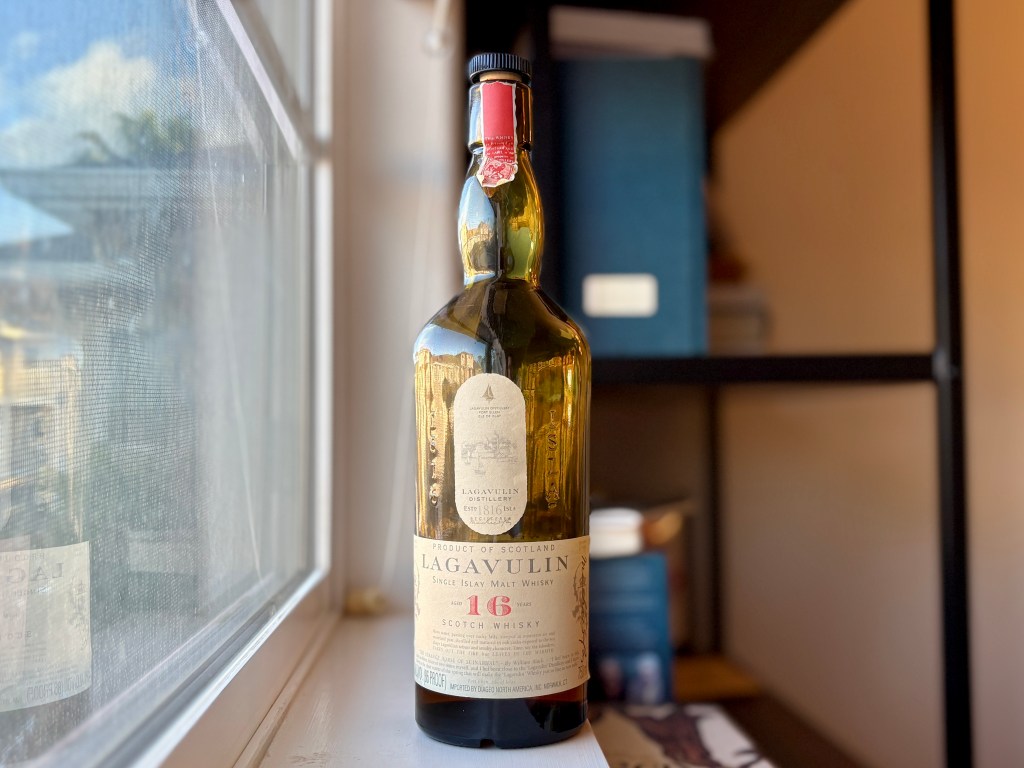
This particular bottle of Lagavulin 16 was bottled in 2007, and if you ever want to find when yours was bottled, look for the laser etched code on the side of the bottle which should typically include a Lot Code. These can vary a bit, but typically the first number that appears is the last digit in the year it was bottled with the next three numbers the day of the year. The code on this bottle gives us L7283, meaning it was bottled on the 283rd day of a year ending in 7. Knowing whether it is 2007 or 2017 requires taking a closer look at the label to narrow it down. While it can be bit annoying to have labels constantly getting refreshed or changed, even if just slightly, it does make dating bottles a bit more straightforward and Lagavulin has regularly seen slight graphic, color, and font changes to the label which helps to narrow this down to the early 2000s and 2007 more precisely.
Whisky: Lagavulin 16 Year c. 2007
Country/Region: Scotland/Islay
ABV: 43%
Cask: Oak
Age: 16 Years
Notes: Rich barbecue and incense smoke drifted by on a stony sea shore— smoke, stone, brine, and resin. A bit of tar opened the door to more industrial and machine shop notions with greasy shop rags, lubricant, and petrol. Light-bodied on the palate, the flavors were similar with dirty smoke and car garage vibes opening to stoney beaches and salty spray. Wood resins and oak moss waited further in, a classy turn that provided peppercorns, caramelized fats, sugars, and a bit of hoisin sauce— from the car park to classy fine dining. The finish was medium to long with a bit orange and fruits finally appearing from a cloud of smoke and gentle peppery nibble.
Score: 6-7 (80)
Mental Image: The White Rabbit
Conclusion: There is a reason this is a gateway whisky for many drinkers. Though the price of the 16 year has crept up over the years, it remains the gold standard introduction to peated malts in my book. The paring of peat and sherry cask maturation wonderfully well. The whisky is balanced, and light enough on the palate that it makes for a warm welcome— no bear hugs or burns. It can be a touch dirty, and some prefer cleaner, coastal profiles, but it makes for a good place to start any exploration.


Leave a Reply